
Under the current backdrop of the chemical industry's pursuit of green and efficient development, a new type of catalytic material called TS-1 titanium-silicon molecular sieve is attracting widespread attention from the industry. This crystal material with a unique MFI topological structure, thanks to its excellent shape-selective catalytic ability and oxidation catalytic characteristics, is becoming the "chip" for the chemical industry to achieve green transformation.
With domestic enterprises' continuous breakthroughs in the research and development of TS-1 titanium-silicon molecular sieves, this technology, which was once dependent on imports, is constantly breaking foreign monopolies and injecting new vitality into China's chemical industry.
1. The evolution of production processes from complexity to simplicity
The production process of TS-1 titanium-silicon molecular sieve has undergone an evolution from traditional complex processes to modern efficient methods. According to the Technology Transfer Center of Nanjing Tech University, the traditional industrial synthesis method of TS-1 molecular sieves has many limitations.
The traditional method uses tetrapropyl ammonium hydroxide (TPAOH) as the template agent to hydrolyze ethyl orthosilicate (TEOS) and titanate successively. The initial product is obtained through hydrothermal synthesis first, and then it undergoes multiple hydrothermal post-treatments to produce highly active TS-1 molecular sieve. However, this production process is cumbersome and some steps are difficult to control, which makes the performance of TS-1 molecular sieve unstable and also increases its production cost.
In response to these problems, new generations of production processes are constantly emerging. The dry gel method for preparing TS-1 molecular sieves developed by Nanjing Tech University uses only one-third to one-fourth of the expensive TPAOH template agent as in the hydrothermal method. This technology also avoids the complex post-treatment process of the existing industrial production of TS-1 molecular sieves, and greatly improves the production efficiency per unit time, significantly reducing production costs.
2. Performance optimization, from basic to efficient improvement
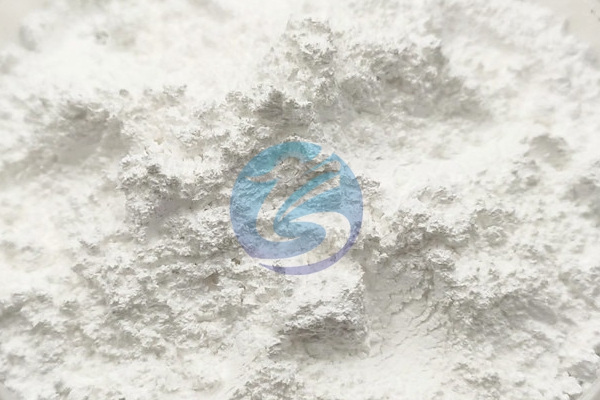
TS-1 titanium-silicon molecular sieve is a titanium-containing microporous molecular sieve, in which some silicon atoms in its framework are replaced by titanium atoms. Its chemical formula can be expressed as Ti youdaoplaceholder8 Si? youdaoplaceholder5 youdaoplaceholder8 O? (x is usually 0.01 to 0.02). Its crystals are in the form of white powder, with a pore size of approximately 0.55 nanometers and a specific surface area of 350 to 400 square meters per gram. It has good thermal stability and can stably exist below 550℃. In recent years, researchers have optimized the performance of TS-1 molecular sieves through various methods. The modification method of titanium-silicon molecular sieve TS-1 developed by Duofu New Materials Co., Ltd. has solved the problems of easy breakage and collapse of the structure of titanium-silicon molecular sieve TS-1, loss of titanium source and short catalytic service life.
This method reduced the catalytic efficiency of TS-1 from 5 catalytic cycles to below 80% and increased it to maintain a catalytic efficiency of over 85% after 15 catalytic cycles.
3. Application fields: Expansion from chemical engineering to environmental protection
TS-1 titanium-silicon molecular sieve combines the shapselective catalytic property of molecular sieves with the oxidation catalytic ability of titanium active centers. Under mild conditions, it can activate hydrogen peroxide and exhibits excellent catalytic activity and selectivity for reactions such as epoxidation of olefins and hydroxylation of aromatics.
3.1 Chemical Production
In the field of chemical engineering, TS-1 titanium-silicon molecular sieves have become the most crucial catalyst technology in modern clean chemical industries such as the production of caprolactam by cyclohexanone amoxime and the direct oxidation of propylene to propylene oxide. The "Industrial Preparation Technology of High-Performance Multi-level Porous Titanium-Silicon Molecular Sieve Catalysts" developed by the Institute of Industrial Catalysis of Zhengzhou University uses simple equipment to enable low-cost titanium sources and silicon sources to self-assemble under certain processes at relatively low temperatures and pressures. Highly crystalline multi-level porous MFI-structured titanium-silicon oxides with a skeleton composed of titanium oxide and silicon oxide can be synthesized in a short reaction time.
3.2 Environmental Protection Field
In the field of environmental protection, TS-1 titanium-silicon molecular sieves have demonstrated great potential in wastewater treatment. With the global sulfur content limit for Marine fuel oil reduced to 0.05wt%, the development of efficient oxidation desulfurization technology has become an urgent need in the energy sector. Titanium-silicon molecular sieve TS-1 shows great potential in oxidation desulfurization reactions due to its unique Lewis acidic sites and shap-selective catalytic properties.
3.3 Synthesis of New Materials
In the synthesis of new materials, TS-1 titanium-silicon molecular sieves also play a significant role. Research has found that titanium-silicon molecular sieve TS-1 exhibits high performance in many low-temperature organic reactions using hydrogen peroxide as the oxidant, such as the epoxidation of olefins and the oxidation of alcohols to aldehydes or ketones.
Catalysts are hailed as the "chips" of industrial production. A tiny bottle of powder is closely linked to 90% of industrial production processes. With the continuous innovation and breakthroughs of Chinese enterprises in the field of TS-1 titanium-silicon molecular sieves, this technology, which was once monopolized by foreign countries, is making a leap from catching up to leading in China's chemical industry.
The breakthrough in the localization of TS-1 titanium-silicon molecular sieve technology not only broke the foreign technological monopoly but also promoted the entire chemical industry to develop in a green, efficient and sustainable direction, injecting new impetus into China's green chemical industry.